BREAKING:Kenyan Court Halts U.S. Health Data Deal, Citing Privacy “Harm Beyond Recall”

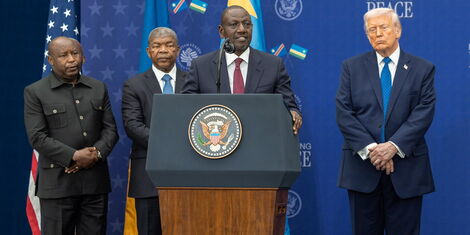
A controversial health cooperation agreement between Kenya and the United States has been suspended by the High Court, following a legal challenge over fears that the transfer of citizens’ sensitive medical data could cause “permanent and irreversible” harm.
Justice Bahati Mwamuye issued conservatory orders on Thursday, specifically blocking the components of the pact that provide for “the transfer, sharing, or dissemination of medical, epidemiological, or sensitive personal health data.” The order restrains the government from implementing the data-related aspects of the deal until the case is fully heard and determined.
The agreement, known as the Kenya-US Health Cooperation Framework, was signed in Washington on December 4 by Prime Cabinet Secretary Musalia Mudavadi and U.S. Secretary of State Marco Rubio. Valued at approximately Ksh200 billion, it was presented as a major partnership to strengthen Kenya’s health sector.
However, the Consumers Federation of Kenya (COFEK) swiftly moved to court, arguing the deal was conducted “discreetly” and violates the Constitution as well as data protection laws. In urgent filings, the lobby warned that once Kenyan health data leaves the country, “neither this Honourable Court nor Kenyan regulators would have the power to recall, restrict, or oversee how such data is used overseas.”

“This exposes citizens to lasting privacy violations, stigma, and potential misuse of their information,” COFEK asserted. “The irreversible nature of this harm points to the urgency of the matter.”
The court’s intervention comes just a day after President William Ruto publicly defended the agreement. Speaking at a national summit in Nairobi, Ruto sought to dismiss what he called misinformation, insisting that Kenya—not the U.S.—initiated the talks.
“It was the Kenyan government that proposed the framework,” Ruto clarified, adding that U.S. State Department officials had traveled to Nairobi for extensive negotiations. He stated that Attorney General Dorcas Oduor had been fully briefed and had cleared all legal issues relating to data privacy, assuring the public the pact contained “no loopholes.”
The President framed the signing as a mere “formalisation” of already settled terms.
Despite these assurances, Justice Mwamuye found sufficient grounds to pause the data-transfer provisions, acknowledging the potential for irreparable harm. The judge scheduled a mention for February 12 next year before Justice Lawrence Mugambi to confirm compliance and set a timeline for an expedited hearing.
The case has ignited a fierce public debate over data sovereignty, patient privacy, and the transparency of international agreements. It underscores growing scrutiny of how African nations manage and share digital assets with global partners.
For now, the flow of Kenyan health data abroad remains frozen by judicial order, as the nation awaits a final ruling on one of the most consequential digital rights cases in recent memory.