Top U.S. Senator Calls for Reassessment of Partnership with Uganda after Muhoozi’s Reckless Tweets

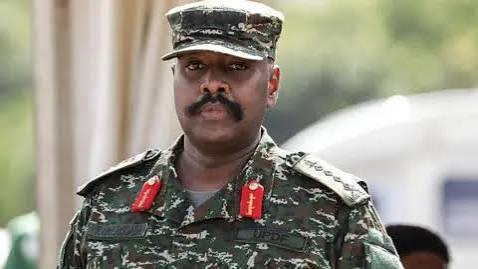
In a dramatic 24-hour diplomatic flare-up, Ugandan military commander and presidential son Muhoozi Kainerugaba has publicly apologised to the United States for social media posts he now claims were based on “wrong information,” only to be met with a stern rebuke from a senior U.S. lawmaker who declared the incident a “red line.”
The controversy began when General Muhoozi, who is also Uganda’s Chief of Defence Forces and widely seen as his father President Yoweri Museveni’s successor, posted allegations on X (formerly Twitter) accusing the U.S. Embassy in Kampala of assisting opposition figure Bobi Wine to flee the country. The specific claims have not been independently verified.
By January 30th, however, Muhoozi performed a sharp public U-turn. In a post, he stated he had deleted the earlier tweets and apologised to “our great friends, the United States.”
“I was being fed wrong information,” he wrote. “I have spoken with the US Ambassador to our country, and everything is okay. We are going to continue our military cooperation as usual.”

The apology seemed aimed at quickly dousing the diplomatic fire. Uganda and the U.S. have a longstanding, though often strained, security partnership, with Washington providing training and support for Uganda’s military, which plays a key role in regional counter-terrorism efforts.
But the fallout was not so easily contained. On January 31st, U.S. Senator Jim Risch (R-Idaho), the ranking member of the powerful Senate Foreign Relations Committee, issued a forceful response that escalated the situation.
“Commander Muhoozi has crossed a red line, and now the U.S. must reevaluate its security partnership, which includes sanctions and military cooperation with Uganda,” Risch stated in a post on the committee’s official X account.
He explicitly dismissed Muhoozi’s retraction, stating, “The president’s son, and likely successor, cannot just delete tweets and issue hollow apologies. The U.S. will not tolerate this level of instability and recklessness when American personnel, U.S. interests, and innocent lives in the region are at stake.”
Senator Risch’s statement transforms the incident from a social media spat into a potential policy crisis. His call to “reevaluate” the security partnership, explicitly mentioning sanctions, suggests a push within the U.S. political establishment for tangible consequences.
Analysts note that Muhoozi’s online behaviour has previously caused diplomatic headaches, but the direct and high-level nature of this U.S. response is notably severe. It reflects growing impatience in some Washington circles with what is perceived as the political impunity and volatility of Uganda’s ruling circle.
The Ugandan government has yet to issue an official statement beyond Muhoozi’s personal apology. The episode leaves critical questions unanswered: What “wrong information” was Muhoozi reportedly fed? Will his public chastisement by a leading U.S. senator impact his political and military standing at home?
More pressingly, it places the entire framework of U.S.-Uganda security cooperation under a cloud of uncertainty, with a senior U.S. lawmaker now explicitly questioning whether the partnership can continue “as usual” in the face of such public provocations from Uganda’s likely future leader.